Why Power Washing Runoff Deserves More Attention in Richmond
A freshly cleaned driveway or exterior can improve a property’s appearance, but the dirty water has to go somewhere. During pressure washing, water picks up whatever is on the surface: soil, oil residue, detergent, paint particles, organic growth, and other debris. Without planning, that mixture can travel into a street gutter, storm drain, neighboring yard, or nearby waterway.
In Richmond, Virginia, runoff management deserves particular attention because local drainage connects neighborhoods with streams and the James River. The city also has a mix of drainage systems, older properties, sloping lots, and densely developed blocks. Responsible power washing means planning for the wastewater before the equipment starts—not simply directing it away from the building.
What Makes Power Washing Runoff Different From Rainwater?
Rain naturally carries pollutants off developed surfaces, but washing can release a concentrated load in a short period. Pressurized water loosens substances that may otherwise remain attached to concrete, masonry, siding, or roofing. Cleaning products can add further contaminants.
The exact risk depends on the surface and cleaning method. Driveway cleaning can release automotive fluids and sediment. House washing can produce detergent-containing water mixed with dirt and deteriorating paint. Roof cleaning may generate runoff containing treatment chemicals and organic material.
Hot-water power washing can be useful for removing grease, but heat does not eliminate the need for wastewater control. Likewise, low-pressure washing may reduce surface damage without making the resulting runoff harmless.
Clear Water Is Not Necessarily Clean Water
Runoff does not need to look oily or foamy to create a problem. Dissolved chemicals, fine sediment, and some metals may not be visible. A product labeled biodegradable can still harm aquatic organisms before it breaks down, and some detergents can affect water quality during decomposition.
“Biodegradable” is not permission to discharge wash water into a storm drain. Product claims should never replace an assessment of where the water will flow and how it will be managed.

Why Richmond’s Drainage System Matters
Many storm drains carry water toward local waterways without the treatment people associate with household sewage. Richmond also has a combined sewer system in portions of the city, where stormwater and sanitary sewage share infrastructure. During wet weather, combined systems can overflow when capacity is exceeded.
This mixed infrastructure makes assumptions risky. A drain’s location or appearance does not establish where it leads, whether a discharge is authorized, or whether treatment will occur. A street inlet should not be treated as an acceptable wastewater disposal point simply because it is nearby.
Richmond’s hills, alleys, curb lines, and closely spaced properties create additional challenges. Water from one driveway can cross a sidewalk and reach an inlet farther down the block. Roof downspouts may discharge onto landscaping, paved areas, or connected drainage infrastructure. Understanding these routes is part of preparing the job.
Different Cleaning Jobs Create Different Runoff Risks
Driveway Cleaning: Oil, Sediment, and Degreaser
Concrete and asphalt can collect oil, tire residue, fine particles, and vehicle-related contaminants. Pressure washing lifts this material and puts it into moving water. Applying degreaser may help with stains, but it can also make the wastewater more complicated to collect and dispose of.
Before driveway cleaning begins, sweep loose debris and use an appropriate absorbent on fresh oil. Collect used absorbent for proper disposal rather than washing it away. If significant automotive contamination is present, recovery equipment and disposal planning may be necessary. A surface cleaner can improve cleaning consistency, but an ordinary model does not automatically capture wastewater.
House Washing: Chemicals and Aging Coatings
House washing often uses cleaning solutions applied at lower pressure. This can be suitable for certain exterior materials, but the solution https://deantxvr502.cloudhinter.com/posts/how-to-choose-the-best-pressure-washing-expert-in-richmond and rinse water still need a controlled destination. Window wells, foundation openings, neighboring plants, and public sidewalks all deserve attention.
Older Richmond homes may have lead-based paint beneath newer coatings. If paint is peeling, chalking, or likely to be disturbed, pause before washing. High pressure can spread contaminated chips and dust. Where work constitutes covered renovation or paint preparation on pre-1978 housing, federal lead-safe requirements may apply. A qualified lead-safe contractor can assess the work rather than treating paint debris as ordinary dirt.
Roof Cleaning: Downspouts and Treatment Chemicals
Roof cleaning requires particular care because gutters can concentrate runoff into a few discharge points. Treatments containing sodium hypochlorite can damage vegetation and harm aquatic life if allowed to reach receiving waters at harmful concentrations.
Before cleaning, identify every downspout and its destination. Collection or diversion may be appropriate, but it must be designed to avoid gutter backups, leaks, and uncontrolled overflow. Follow roofing manufacturer guidance and product directions; high-pressure washing can damage many roofing materials. Never mix chlorine-based cleaners with acids or ammonia-containing products.
A Practical Runoff-Control Plan Before Work Begins
The best controls depend on the property, surface contamination, cleaning products, and available disposal options. A useful pre-job process includes the following steps:
- Inspect drainage routes. Locate street inlets, private drains, downspouts, slopes, and low points. Check whether water could leave the property.
- Remove pollutants while dry. Sweep, collect leaves, pick up paint chips using appropriate precautions, and address oil deposits before adding water.
- Choose the least aggressive effective method. Use suitable pressure, targeted application, and only the cleaning chemistry necessary for the task.
- Set up containment and recovery. Where needed, use berms, drain covers, collection mats, or recovery vacuums to capture wastewater.
- Confirm the disposal route. Determine whether the collected water requires utility approval, pretreatment, off-site disposal, or another authorized approach.
- Monitor throughout the job. Watch containment capacity, changing flow paths, nearby drains, and weather conditions.
A drain cover alone is not a complete plan. Water can build up, flow around the cover, enter another inlet, or create a slip hazard. Captured water needs an appropriate collection point and an approved destination.
Where Should Collected Wash Water Go?
There is no single disposal method suitable for every pressure washing job. Wastewater containing only limited dirt presents different concerns from water containing petroleum residue, paint debris, strong cleaning chemicals, or unusually high or low pH.
Do not assume that a sanitary sewer cleanout, toilet, or utility sink is an authorized disposal location. The receiving wastewater utility may require approval and impose conditions on commercial wash water, including restrictions involving solids, oil and grease, chemicals, and discharge rate.
Before work, consult current guidance from Richmond’s Department of Public Utilities and, where relevant, the Virginia Department of Environmental Quality. Properties outside city limits may fall under a different local utility or stormwater authority. As of 2026, contractors and property owners should verify requirements for the actual job rather than relying on an old handout or a general statement that a product is environmentally friendly.
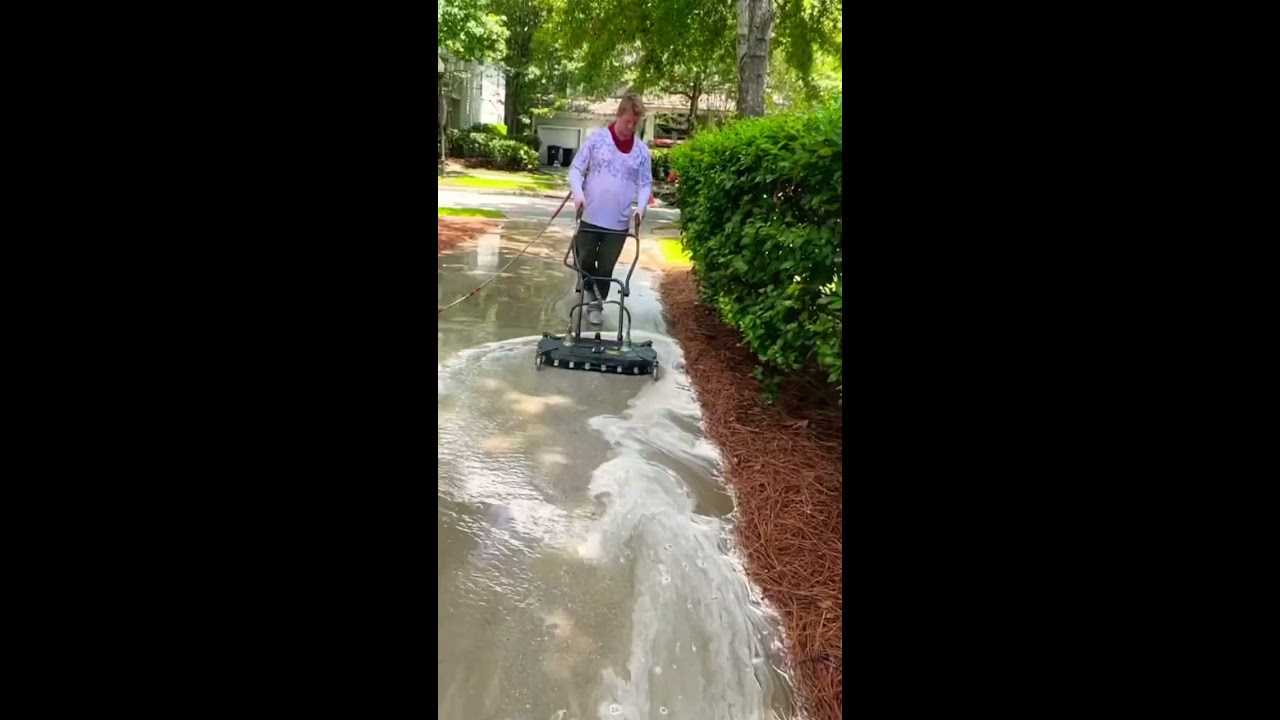
Discharging onto landscaping is not automatically acceptable either. Suitability depends on contaminants, soil conditions, slope, volume, and applicable requirements. Water should not be directed where it can damage plants, reach a well or waterway, cross a property boundary, or flow back into drainage infrastructure. Septic systems should not be used as a convenient outlet for chemical wash water.
Weather and Water Use Affect the Outcome
Check the forecast before scheduling exterior cleaning. Rain can overwhelm temporary containment, move residues left on pavement, and make wastewater harder to capture. On a sloped Richmond property, even a modest shower may change the planned flow route.
Lower water use can help, but it does not solve contamination. Efficient equipment and controlled trigger time can reduce the volume requiring collection. Less water carrying the same amount of cleaner or oil may also be more concentrated, so disposal decisions still matter.
Wind deserves attention during chemical application, particularly near neighboring homes, gardens, parked vehicles, and pedestrian areas. Stop work if spray or runoff cannot be kept within the planned control area.
Questions to Ask a Richmond Power Washing Company
A contractor should be able to explain wastewater handling in practical terms. Equipment matters, but so do preparation, monitoring, and disposal arrangements.
- Where will the wash water flow? Ask for a property-specific explanation, including nearby drains and downspouts.
- What products will be used? Request product information and an explanation of relevant precautions.
- Will wastewater recovery be needed? Ask how contaminated water will be contained, collected, and transported if necessary.
- How will disposal requirements be checked? Look for an answer based on the receiving utility and wastewater characteristics.
- How will plants, pedestrians, and adjacent properties be protected? These protections should be part of the work plan.
Be cautious if a provider says all runoff is safe because the cleaner is biodegradable, or that rinsing it toward the street is standard practice. Neither statement demonstrates responsible management.
A Cleaner Property Should Not Mean Dirtier Water
Power washing can maintain Richmond properties effectively, but the visible cleaning result is only part of the job. The less visible part—where the water goes—can affect local waterways, neighboring properties, landscaping, and public spaces.

Whether planning driveway cleaning, house washing, or roof cleaning, begin with drainage inspection, pollution prevention, and a realistic wastewater plan. The right approach cleans the surface while controlling what leaves it. That is a practical standard homeowners, property managers, and cleaning contractors can use on every project.
Richmond Pressure Cleaning
Unit 2/420 Church St, Richmond VIC 3121
ph. (03) 4231 7213